

An independent AI consultant replaced a slow, inconsistent Upwork proposal process with an AI-powered qualification and proposal system. Proposals now take under a minute, weekly replies increased from 1–2 to 10–15, and the consultant consistently books roughly one new project per week.

A complete internal system for qualifying Upwork jobs, generating personalised proposals, and tracking which outreach strategies convert.
Marcus, an independent consultant specialising in AI automation and GoHighLevel implementations, was spending 45–60 minutes on every Upwork opportunity. He had to interpret the job post, decide whether it was worth the connects, write a tailored cover letter, outline milestones, answer screening questions, and choose relevant portfolio work. Because the process demanded so much time, outreach was inconsistent. More importantly, there was no feedback loop connecting what he wrote with which proposals were viewed, answered, or converted into projects.
The system could not apply blindly. It needed to distinguish strong opportunities from vague scopes, unrealistic budgets, poor-fit technologies, and other warning signs.
Faster generation could not result in generic cover letters. Every proposal still needed to respond directly to the client's problem, requirements, and expected deliverables.
Some opportunities needed a short, direct proposal while higher-value or more complex projects benefited from a longer consultative approach.
Proposal views, messages, and secured projects were not connected to the writing strategy, leaving no reliable way to learn what was working.
The system qualifies the job before generating outreach, then uses funnel data to improve future proposal strategy.
Codoro translated Marcus's existing judgement into a structured screening system. Claude checks each job against defined green flags—including the right technology, a clear deliverable, and a reasonable budget—and red flags such as vague requirements, poor-fit work, and low-budget signals. Every opportunity receives a MUST APPLY, CAUTION, or SKIP rating with a plain-English explanation.
A React dashboard and Node.js API were developed to run the full workflow from one interface. Marcus can paste a job post and receive the qualification result, proposal, milestones, screening answers, and recommended portfolio projects without switching between tools.
Instead of forcing every opportunity into one template, the system rotates between two writing strategies: a concise, high-impact proposal and a longer consultative proposal. Both are personalised to the job, but each tests a different approach to positioning and conversion.
An IMAP integration monitors incoming Upwork job-alert emails. Qualifying opportunities are processed automatically and delivered to Slack with the generated proposal, allowing Marcus to review new jobs quickly without repeatedly checking the Upwork marketplace.
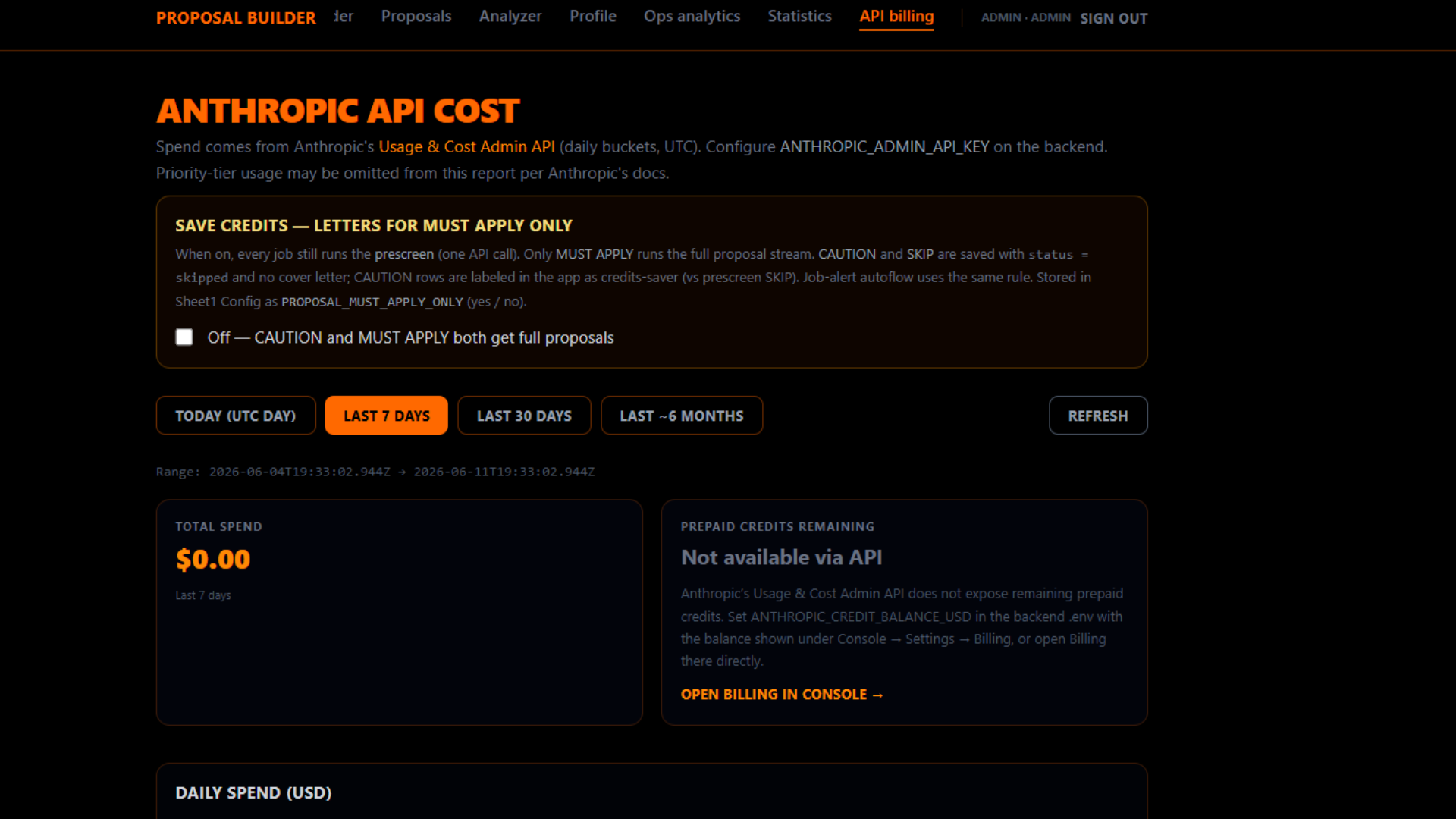
Every submitted proposal is tracked through viewed, messaged, and secured stages in Google Sheets. A strategy analyser connects those outcomes to the proposal format used, making it possible to compare performance and reinforce the approach producing stronger results.
Proposal preparation dropped from 45–60 minutes to under one minute.
Weekly prospect replies increased from approximately 1–2 to 10–15.
Marcus began securing roughly one new project per week consistently.
Low-quality opportunities are filtered before time or connects are spent.
Every proposal includes a tailored cover letter, milestones, screening answers, and relevant portfolio recommendations.
New opportunities can be reviewed directly from Slack without constantly monitoring Upwork.
Proposal performance is now tracked through viewed, messaged, and secured stages.
The system continuously identifies which proposal strategy produces stronger results.
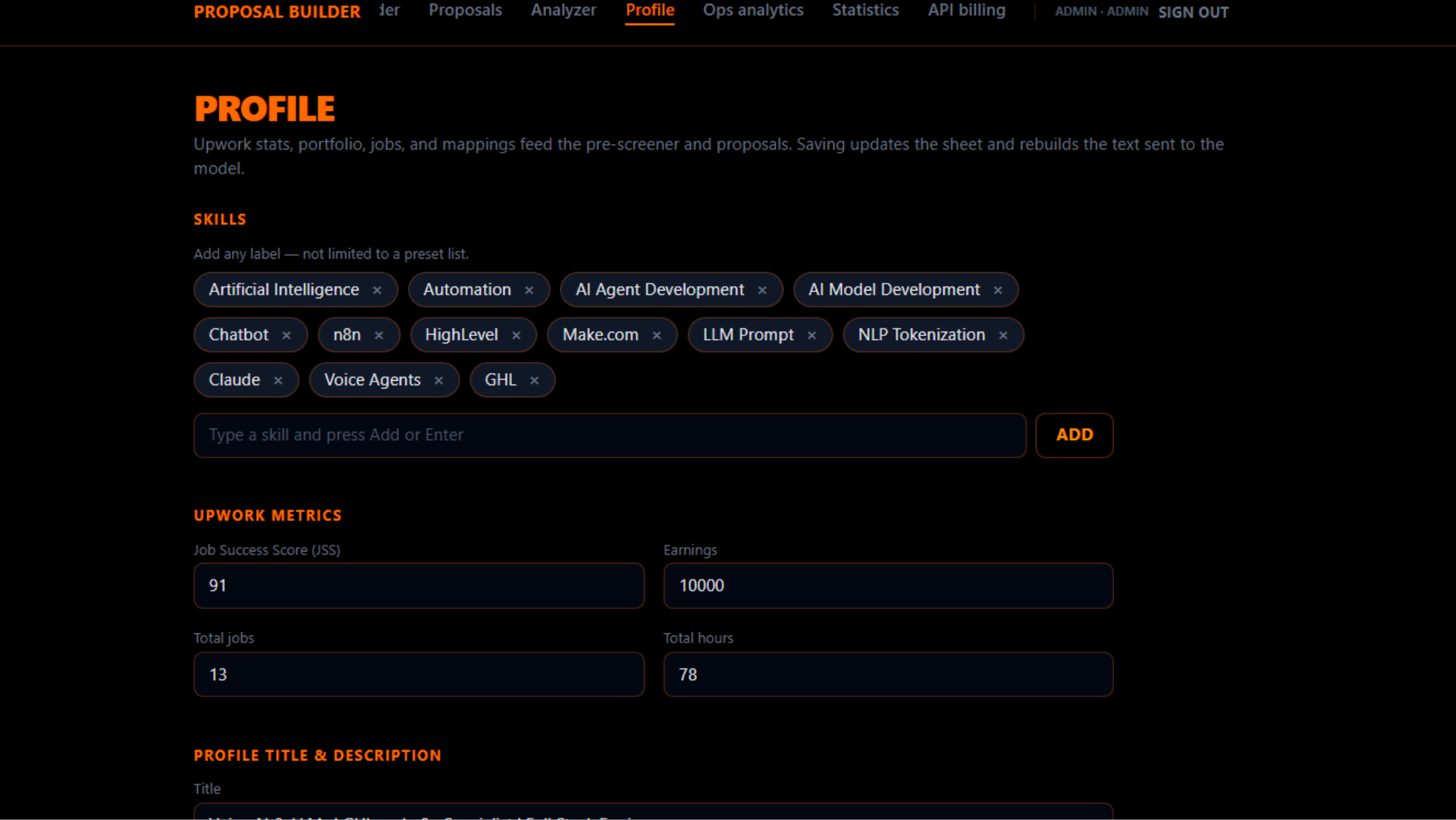 G—01UPWORK OPPORTUNITY QUALIFICATION INTERFACE SHOWING AI SCREENING RESULTS
 G—02AI-GENERATED UPWORK PROPOSAL WITH MILESTONES AND SCREENING ANSWERS
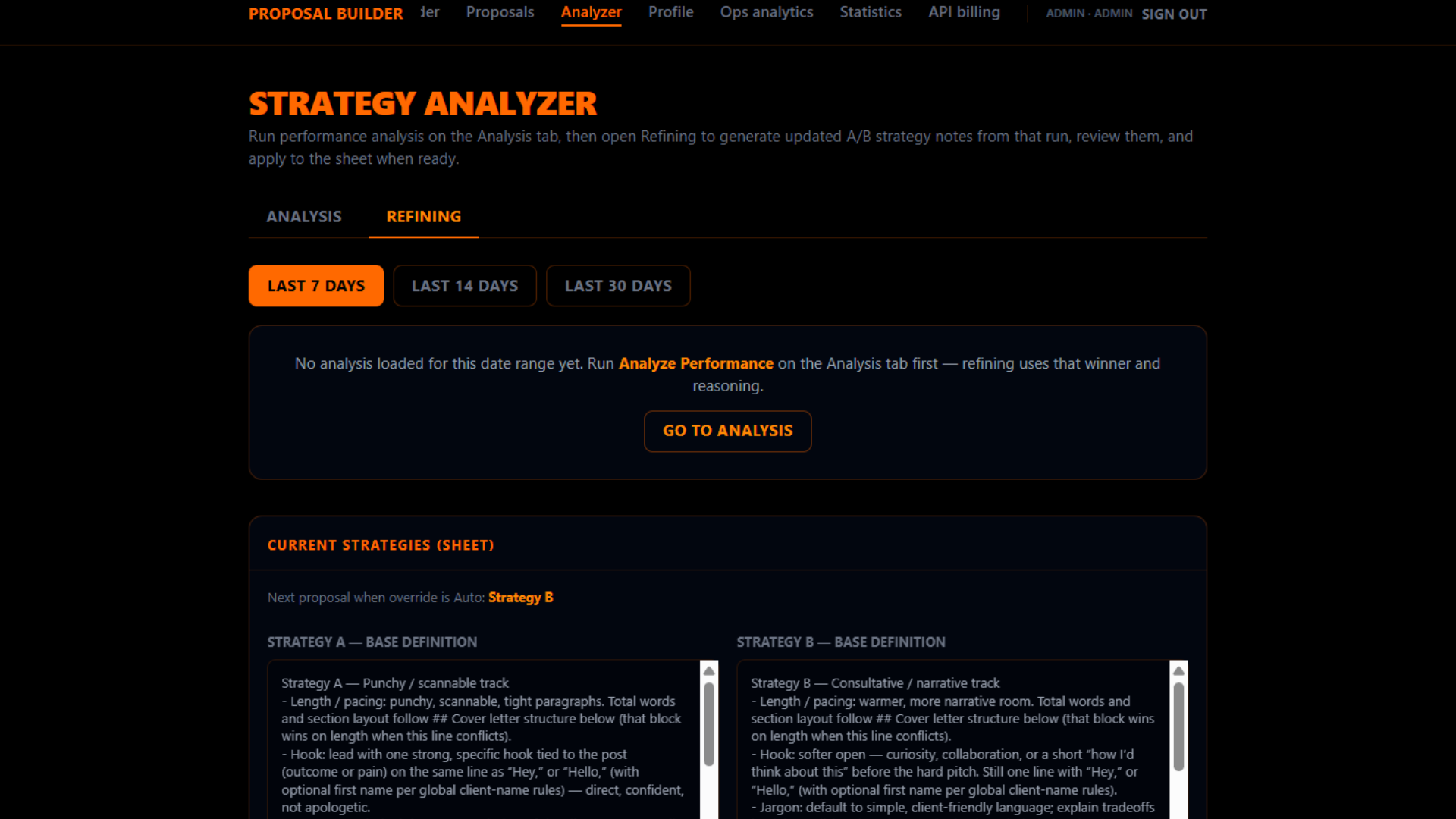 G—03PROPOSAL TRACKING AND PERFORMANCE ANALYTICS FOR UPWORK OUTREACH
Proposals in seconds. My reply rate went through the roof.
We map exactly where your operation loses hours and which constraint to enforce first — specific to your fleet, not a case study.